
Quick Answer: Living with hardwood floors comes down to three habits: sweep or vacuum often, damp mop with a gentle wood-safe cleaner instead of soaking the boards, and anchor high-traffic areas with a dense felt or felt-and-rubber rug pad. That last step is what quiets footsteps and protects the finish at the same time.
Wood floors look effortless in photos. Living with hardwood floors day to day is a little different: you hear more, you sweep more, and you learn fast that the wrong rug pad can do more harm than no rug at all. The routine is short once you know it. Residents touring apartments at The Crawford at Denison ask about this constantly, so here is the honest version.
What to Look For in Living Rooms With Hardwood Floors
Living rooms with hardwood floors reward layout planning more than any other room. Look at where sunlight lands, where the traffic path runs from door to sofa, and how much bare floor sits between hard surfaces. Open, uncovered wood bounces sound. A single well-placed rug fixes most of it.
Measure before you buy anything. A rug that floats in the middle of the room with bare wood showing on every side does almost nothing for noise. Front legs of the sofa and chairs should sit on the rug. That one rule solves both problems at once.
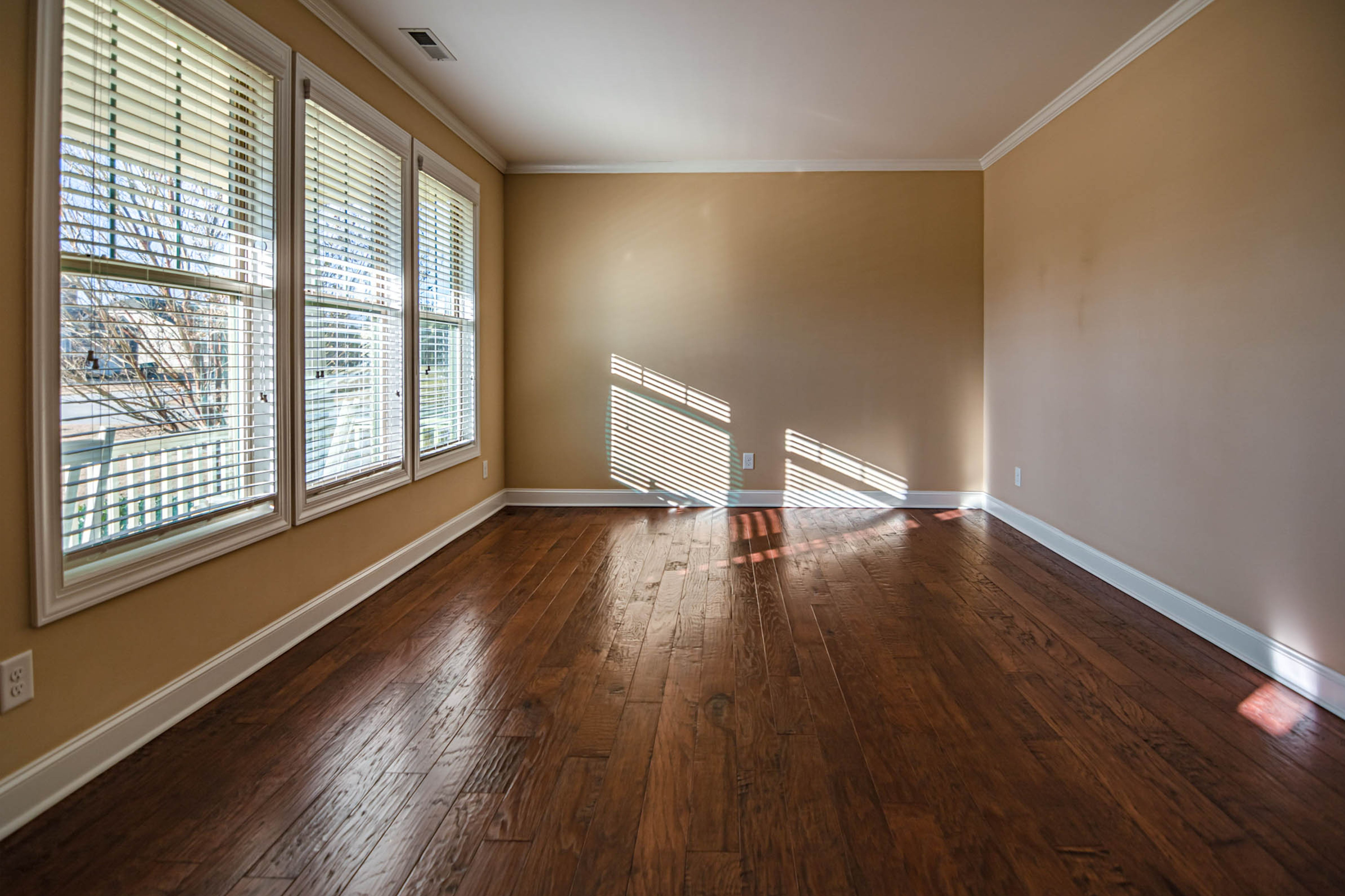
Living Rooms With Dark Hardwood Floors Show More, Not Less
Dark floors photograph beautifully and hide almost nothing. Dust, pet hair, and the fine grit that rides in on shoes all show up against a deep espresso or walnut finish. Lighter oak forgives more.
If you have living rooms with dark hardwood floors, plan on a quick pass with a microfiber dust mop every couple of days rather than a weekly deep clean. It takes ninety seconds. Skipping it for a week means grit gets ground into the finish by foot traffic, and that is what dulls the sheen over time.
What Is the Best Way to Clean Hardwood Floors?
The best way to clean hardwood floors is dry first, damp second. Sweep or vacuum on a hard-floor setting to lift grit, then mop with a barely damp microfiber pad and a cleaner made for finished wood. Water is the enemy here. Standing moisture swells the boards and lifts seams.
Hardwood Floor Maintenance on a Simple Schedule
Good hardwood floor maintenance is boring by design. Dust mop two or three times a week, spot-clean spills as they happen, and do a full damp mop every two to four weeks depending on traffic and pets. Add felt pads under every chair and table leg, then check them twice a year because they wear flat and start dragging.
Skip the steam mop. It forces heat and moisture straight through the finish into the wood, and most flooring warranties treat that as misuse. Skip undiluted vinegar too. It is acidic enough to etch polyurethane over repeated use, and the shine does not come back on its own.
Humidity matters more than people expect. Wood expands in damp air and shrinks in dry air, which is what opens seasonal gaps between boards. The U.S. Environmental Protection Agency recommends keeping indoor relative humidity below 60 percent and ideally between 30 and 50 percent, which happens to be the same range most wood flooring manufacturers ask for. A ten dollar hygrometer tells you where you stand.
Pet-Friendly Hardwood Floors Take Three Small Habits
Pet friendly hardwood floors are absolutely possible. Trim nails on schedule, because scratch marks come from the nail tip catching, not from the pad. Put a waterproof tray under food and water bowls, since a slow drip in one spot will darken wood faster than a single big spill. Wipe muddy paws at the door.
One honest caveat: no residential wood floor is scratch-proof. Harder species and factory-applied aluminum oxide finishes resist better, but a large dog sprinting across a room will eventually leave marks. Rugs on the running lanes solve most of it.
How Do You Reduce Floor Noise and Quiet Creaky Hardwood Floors?
To reduce floor noise, you need mass and softness between the impact and the boards. Rugs with dense pads absorb footstep energy before it becomes sound. Soft furnishings on the walls and windows handle the echo that bare wood creates in a room with high ceilings and little upholstery.
Creaky hardwood floors are a separate problem. Creaks come from movement, usually a board rubbing against a neighbor or against a fastener that has loosened, and seasonal humidity swings make it worse in winter when everything shrinks. In an apartment, do not attempt screws or shims yourself. Log a maintenance request and let the team look at the subfloor. In the meantime, a rug over the noisy stretch dampens it noticeably.
Rugs and Pads That Soundproof Hardwood Floors
You cannot truly soundproof hardwood floors in a rental, but you can cut impact noise a lot. The pad does more work than the rug. Dense felt absorbs sound, natural rubber grips the floor and adds a little cushion, and the combination of the two is the standard recommendation for wood.
| Pad Type | Typical Thickness | Noise Control | Best For |
|---|---|---|---|
| Thin rubber grip only | 1/8 inch | Minimal | Flatweave runners in tight doorways |
| Memory foam | 3/8 to 1/2 inch | Soft underfoot, moderate | Bedrooms and low-traffic corners |
| Dense felt | 1/4 to 3/8 inch | Strong, absorbs impact and echo | Large living room rugs |
| Felt and natural rubber | 1/4 to 3/8 inch | Strong, plus it stays put | The default pick for wood floors |
One warning worth repeating. Avoid PVC and adhesive-backed pads sold as budget options, because the plasticizers in them can react with a polyurethane finish and leave a cloudy pattern that does not buff out.
Layout helps too. In the open-concept homes on our floor plans, running a large rug under the seating area and a runner along the main walking path cuts most of the footstep noise you would otherwise hear from below.
Frequently Asked Questions
1. Can I use a steam mop on hardwood floors?
No. Steam mops drive hot moisture through the finish and into the wood, which causes cupping, cloudy patches, and lifted seams. Most manufacturers void warranty coverage for steam damage. A microfiber mop dampened with a wood-specific cleaner gets floors just as clean without the risk.
2. What are the most useful hardwood floor care tips for renters?
Keep it simple and reversible:
- Felt pads under every furniture leg, replaced twice a year
- A doormat at the entry and a no-shoes habit inside
- Rug pads made of felt or felt with natural rubber, never PVC
- Spills wiped within minutes, not hours
- Maintenance requests for creaks or loose boards instead of DIY repairs
3. Why do my hardwood floors creak more in winter?
Heated indoor air is dry air. Wood loses moisture, boards shrink slightly, and the gaps that open up let pieces rub when you step on them. Running a humidifier to hold indoor humidity in the 30 to 50 percent range usually reduces winter creaking within a couple of weeks.
4. Do area rugs damage hardwood floors?
Rugs themselves rarely cause damage. Problems come from the pad underneath or from trapped grit. Use a breathable felt or felt-and-rubber pad, shake and vacuum under the rug every month or two, and rotate large rugs annually so sunlight fades the floor evenly across the room.
5. Are hardwood floors a good choice with a dog?
Yes, with adjustments. Keep nails trimmed, add rugs on the routes your dog runs and turns, and put a waterproof mat under the water bowl. Expect light surface scratches over time. They are part of the character of a wood floor and far less visible on matte finishes.
Conclusion
Living with hardwood floors is easier than the internet makes it sound. Dust mop often, keep water off the boards, hold humidity in a sensible range, and put a dense pad under every rug you own. Do that and the floor stays quiet, keeps its shine, and handles pets and daily traffic without drama.
Want to see how the wood floors look in person? Browse the photo gallery or take a look at the community features at The Crawford at Denison.