
Quick Answer: To tour an apartment properly, treat the visit as an inspection instead of a showing. The 15 things to check before you sign cover plumbing, power, cooling, appliances, windows, leaks and pests, cell signal, locks, smoke alarms, noise, parking, amenities, the listing, fees, and the lease. Test each one yourself and get every repair promise in writing.
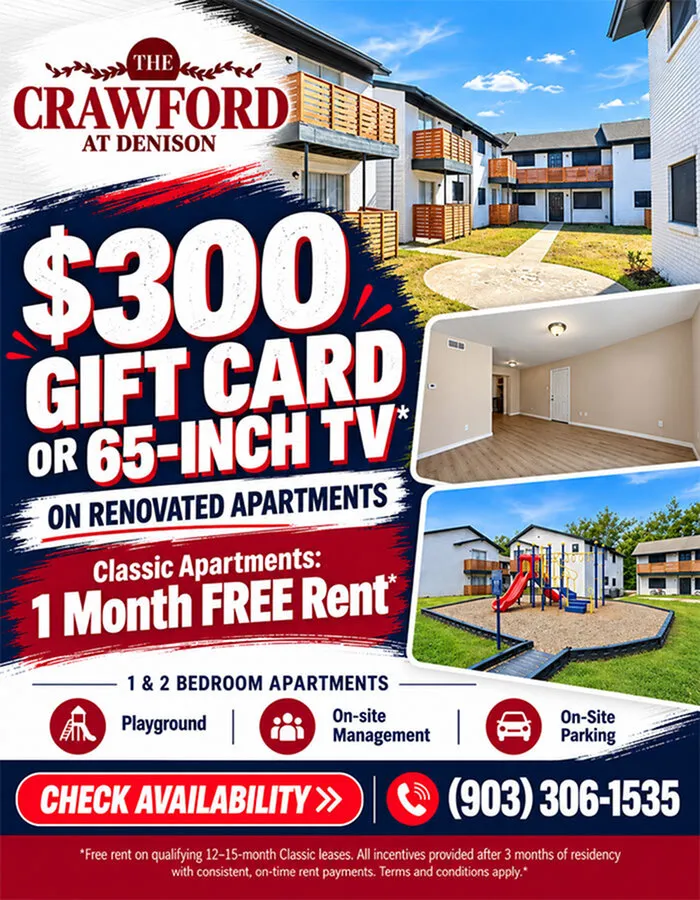
Twenty minutes of poking around can save you twelve months of regret. If you want to tour an apartment properly, you need a plan before you walk through the door, and this guide gives you 15 things to check before you sign. It works for apartment tours anywhere in the country, including communities like The Crawford at Denison, serving renters in Denison and across Texoma.
What Is an Apartment Walkthrough, and Why Does It Matter?
An apartment walkthrough is a hands-on inspection of the exact unit you would rent, done before any money changes hands. You're not just admiring the layout. You're testing fixtures and confirming the place matches the listing, so problems get fixed or documented before a signed lease makes them your headache.
Why bother? According to the U.S. Census Bureau's 2021 American Housing Survey housing quality summary, 15.3 million of the nation's 128.5 million occupied homes saw signs of mice or rats in the prior year, and 10.5 million reported water leaking from inside the home. Those figures cover owners and renters together, and conditions vary a lot by building and region.
Most apt guides stop at "look around." This one gives you a checklist you can actually run.
Apartment Tour Checklist: 15 Things to Check Before You Sign
Bring your phone and a charger. Ask to see the exact unit you'd lease, not only the model, and compare its size and layout against the published floor plans.
Inside the Unit
- Water pressure and drains. Run the shower and kitchen faucet together, then flush the toilet. Open the sink cabinets and look for drips or a warped cabinet floor.
- Outlets, switches, and the breaker panel. Plug your charger into an outlet in every room and flip each light switch. Find the breaker panel too.
- Heating and cooling. Turn the thermostat down several degrees and wait a few minutes. In a North Texas summer, an air conditioner that only blows lukewarm air is a real problem, not a quirk. Ask how often filters are replaced.
- Appliances. Open the fridge and freezer, light each burner, and run the dishwasher and disposal if the unit has them. Raise anything missing on the spot.
- Windows, blinds, and natural light. Open and lock every window. Check the screens for tears. Notice which way the main rooms face, since west-facing glass means hotter afternoons and higher cooling bills.
- Leaks, mold, and pests. Scan ceilings for brown rings, check closet corners for dark spots, and look inside cabinets for droppings. A musty smell is a warning sign too.
- Cell signal and internet. Make a quick call from the bedroom and bathroom. Before the tour, enter the address on the FCC National Broadband Map to see which providers report service there. The map relies on provider-reported data, so confirm with the leasing office which companies actually serve the building.
Safety and Security
- Locks and door viewers. In Texas, Chapter 92 of the Texas Property Code requires landlords to provide certain security devices at their own expense, including a keyless bolting device and a door viewer on each exterior door, plus a pin lock and a handle latch or security bar on sliding glass doors. Test every lock, and ask when the locks were last rekeyed.
- Smoke alarms. The same chapter requires at least one smoke alarm in each separate bedroom, with additional alarms in a hallway serving multiple bedrooms and on each level of a multi-story unit. Count them as you walk.
- Lead paint disclosure in older buildings. For most housing built before 1978, the EPA and HUD lead disclosure rule requires the landlord to tell you about any known lead-based paint or hazards before you sign. Newer buildings are exempt. If the property is older, ask for the disclosure form.
The Building and Community
- Noise and neighbors. Close the windows and stand still for a full minute. Listen for footsteps overhead, slamming doors, barking dogs, or highway hum. Drive by again one evening if you can.
- Parking, laundry, trash, and mail. Is parking assigned or first come? Where do guests park? Walk the route from your door to the dumpster and mailboxes, then check your commute on the neighborhood map.
- Amenities and common areas. Visit the pool, fitness room, or laundry room in person. Are they clean and working? Compare what you see against the community's posted amenities list, and note the hours.
Money and Paperwork
- The listing and the people behind it. The Federal Trade Commission reports that consumers filed nearly 65,000 rental scam reports from 2020 through mid-2025, with about $65 million in losses. Confirm the unit appears on the property's own website, ask the agent for a company-issued business card, and walk away from anyone demanding payment by wire transfer, gift card, or cryptocurrency. The FTC's rental listing scam guide lists more warning signs.
- The lease and the move-in condition form. Ask for a copy of the lease to read at home. Look closely at monthly fees, renewal terms, early termination costs, and who pays for which repairs. Then ask for the move-in inspection form, photograph every flaw you find, and get any promised repairs written into the paperwork.
What Apartment Tour Questions Should You Ask?
The best rental questions to ask are the ones that expose the true monthly cost and how the property handles problems. Keep your questions to ask apartment tour staff saved on your phone, and write the answers down right away so you can compare communities later.
| Question | Why It Matters |
|---|---|
| What is the total monthly cost, including every fee? | Trash, pest control, parking, and amenity fees can sit on top of base rent. |
| Which utilities are included, and what does a typical summer bill run? | Electric costs swing hard in Texas heat, so budget for the peak month. |
| Is this the exact unit I would lease? | Model units are often staged or finished differently than available units. |
| How do I submit maintenance requests, and is there after-hours emergency service? | Response time matters most when the AC quits in August. |
| What does it cost to break the lease early? | Job transfers happen, so know the exit cost upfront. |
| What are the pet rules, deposits, and monthly pet fees? | Breed limits and pet rent vary widely between properties. |
| Which lease lengths are available? | Shorter terms add flexibility but may change the monthly rate. |
| What is due at signing, and when can I move in? | This sets the cash you need on hand and your move timeline. |
Frequently Asked Questions
1. What are the things you need to rent an apartment?
Requirements vary by property, but most applications ask for some version of the following:
- A valid government-issued photo ID
- Proof of income, such as recent pay stubs or an offer letter
- Rental history or contact details for past landlords
- An application fee and deposit, paid only through the property's official channels
2. What should be on a first time renters checklist?
A first time renters checklist starts with a realistic budget, since rent is only part of the monthly cost. Research the property and its reviews before you visit. On the tour, run every item on the 15-point list above. Afterward, read the full lease and photograph the unit's condition on move-in day.
3. How long should an apartment tour take?
Plan on at least 30 minutes for a single unit, longer if you want to see the amenities. A rushed ten-minute walkthrough rarely leaves time to test the plumbing and locks. If the agent seems hurried, ask to come back for a second look before you apply.
4. Is a virtual apartment tour enough?
A virtual tour helps you narrow choices, but it can't show you water pressure or how loud the neighbors are. The FTC also warns that a video or self-guided tour isn't proof a rental is real, since scammers copy those listings too. Visit in person when you can, or send someone you trust.
5. Should I take photos during an apartment tour?
Yes, as long as the agent is fine with it. Photos help you compare units once you're home, when details start to blur. Paired with a signed move-in condition form, they're your best record of what was already damaged before you arrived.
Conclusion
Learning to tour an apartment properly takes one afternoon and protects you for the entire lease. Run the plumbing, test the locks, count the smoke alarms, verify the listing, and read every page before you sign. Ready to put the checklist to work in Denison? Schedule a tour at The Crawford at Denison and see how it measures up for your move to Texoma.